
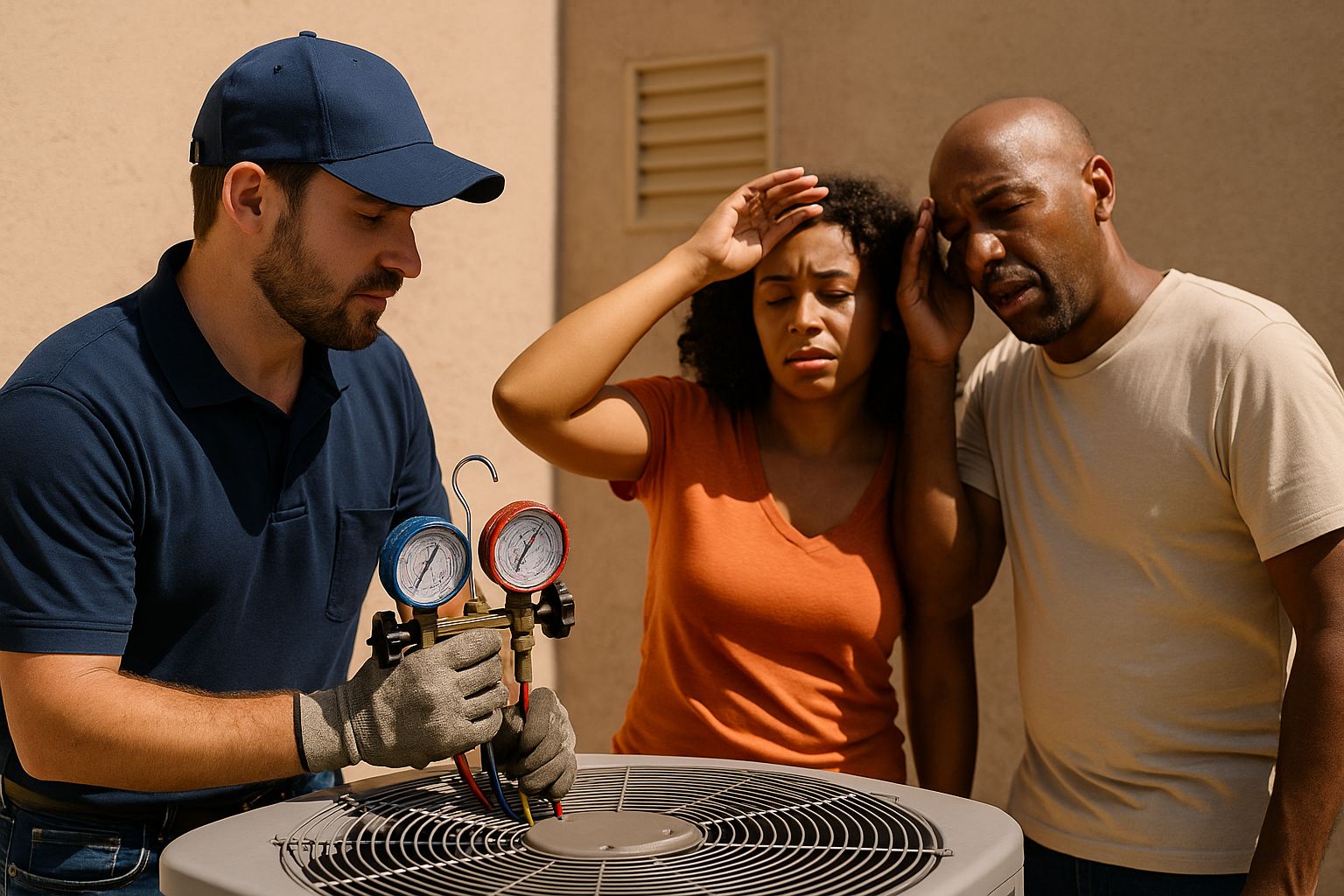
Real Case Studies and How They Were Prevented
Air conditioning isn’t just a matter of comfort in Las Vegas—it’s a necessity. With daily highs regularly exceeding 110°F in the summer, a sudden HVAC failure can quickly turn into a health hazard. From heatstroke to heat exhaustion, the consequences of even a few hours without cooling can be serious, especially for children, the elderly or those with health conditions.
Unfortunately, emergency AC failures are more common than many homeowners expect—and in nearly all cases, they were preventable. This article details real examples of catastrophic cooling failures in Southern Nevada, explains what went wrong and shows how those situations could have been avoided with smarter maintenance and timely intervention.
These aren’t hypotheticals. These are firsthand service scenarios drawn from Wave Heating & Cooling’s field logs, demonstrating how local knowledge, professional systems checks and common-sense care can mean the difference between relief and disaster during a desert heatwave.
1. The Stakes of Failure in 110°F+ Temperatures
Las Vegas heat isn’t just “hot.” It’s dangerous. Indoor temperatures can spike rapidly when AC stops functioning, often rising 1°F every 10 minutes in homes with poor insulation or western-facing windows.
Health consequences of indoor overheating:
– Heat exhaustion: Nausea, headaches, dizziness
– Heatstroke: Confusion, unconsciousness organ failure
– Exacerbated chronic conditions: Asthma, heart disease
Beyond the health risks, property damage is possible as well—AC condensate backups can cause ceiling leaks or mold growth, while overloaded compressors can trip breakers or cause fire hazards.
2. Case Study: The Unnoticed Motor Run Assist in North Las Vegas
In July 2022, a family of four contacted Wave Heating & Cooling after their AC shut down during a 114°F weekend. Their motor run assist had finally failed after years of slow degradation. It was swollen and leaking fluid.
Prior to this failure:
– The unit had shown signs of slow fan startup
– It had been over 3 years since the last maintenance
Fortunately, a same-day emergency service restored cooling in 2 hours. But with regular seasonal inspections, this failure would never have happened—and the family wouldn’t have needed to vacate to a hotel overnight.
3. Case Study: Condensate Catastrophe in Summerlin
A homeowner reported a ceiling stain growing rapidly during a heatwave. The source? A clogged condensate line. The backup triggered a slow leak that had been soaking insulation above the bedroom ceiling for days.
Wave technicians responded and found:
– The secondary drain pan was full
– The float switch had failed to shut off the unit
– Mold was forming behind the drywall
Total repair cost: Over $1,800 for drywall, insulation and cleanup. The fix? A two-hundred-dollar condensate flush and float switch test during spring maintenance would have prevented it entirely.
4. Case Study: Duct Collapse in a Rental Property
In east Las Vegas, a property manager contacted us when tenants reported rooms not cooling at all. The AC was blowing, but certain vents were completely dead.
Our diagnosis:
– The main flexible duct feeding three rooms had collapsed in the attic
– Extreme attic heat (over 140°F) had weakened the support strapping
– The system had been running for weeks at 100% capacity, stressing the blower
Solution: We replaced the failed duct and installed new supports with heat-resistant fasteners. But the resulting inefficiency caused a blower motor to fail prematurely, adding to cost and discomfort. A routine ductwork inspection in spring would have caught the issue before it caused a chain reaction.
5. What Causes Most Emergency Failures?
Based on over 15 years of local HVAC service data, the majority of Las Vegas summer failures result from:
– Neglected maintenance: Old filters, dirty coils, untested electrical parts
– Age-related wear: Systems over 10 years old are more vulnerable
– Improper sizing or installation: Short cycling, airflow imbalances
– Lack of backup sensors: Faulty float switches, no surge protection
Each of these issues is 100% detectable with regular service plans and smart system design. Emergencies are rarely sudden—they’re slow builds that snap under strain.
6. The Role of Maintenance in Prevention
Wave Heating & Cooling emphasizes preventive care not as an upsell—but as insurance against heatwave breakdowns. A full system check includes:
– Motor run assist and contactor voltage testing
– Coil inspection and cleaning
– Filter checks
– Thermostat calibration
– Refrigerant charge verification
– Duct pressure testing
– Safety float switch testing for condensate overflow
Homes that follow a seasonal maintenance schedule experience 40% fewer summer failures than non-maintained systems, based on Wave’s customer database since 2019.
7. Real-World Tips to Prevent an HVAC Emergency
Whether you’re a homeowner or landlord, here are actions to take before the next heatwave:
– Schedule early maintenance (March–May)
– Test your thermostat, run cooling cycle early
– Replace filters regularly (every 1–2 months)
– Visually inspect outdoor condenser for obstructions
– Ask for a float switch test and line flush during tune-up
– Enroll in an annual HVAC plan with priority service
If you’re not sure your system can handle the summer ahead, it’s better to find out in May than in July when every HVAC contractor in town is booked solid.Final Thoughts: Emergency Failures Are Avoidable
In the harsh climate of Las Vegas, HVAC failure isn’t just inconvenient—it’s dangerous. But it’s also almost always preventable. The families mentioned in this article didn’t ignore their systems—they simply didn’t know how close to the edge they were.
Smart homeowners protect themselves with annual maintenance, expert inspections and up-to-date systems designed to withstand the Mojave’s worst. Don’t wait until your thermostat stops responding. If your system hasn’t been inspected this year, now is the time.
Wave Heating & Cooling offers the diagnostics, preventive care and emergency response Las Vegas homes need to stay safe, cool and confident—no matter how hot it gets.
Comments are closed