
Why ducts matter more than most people think
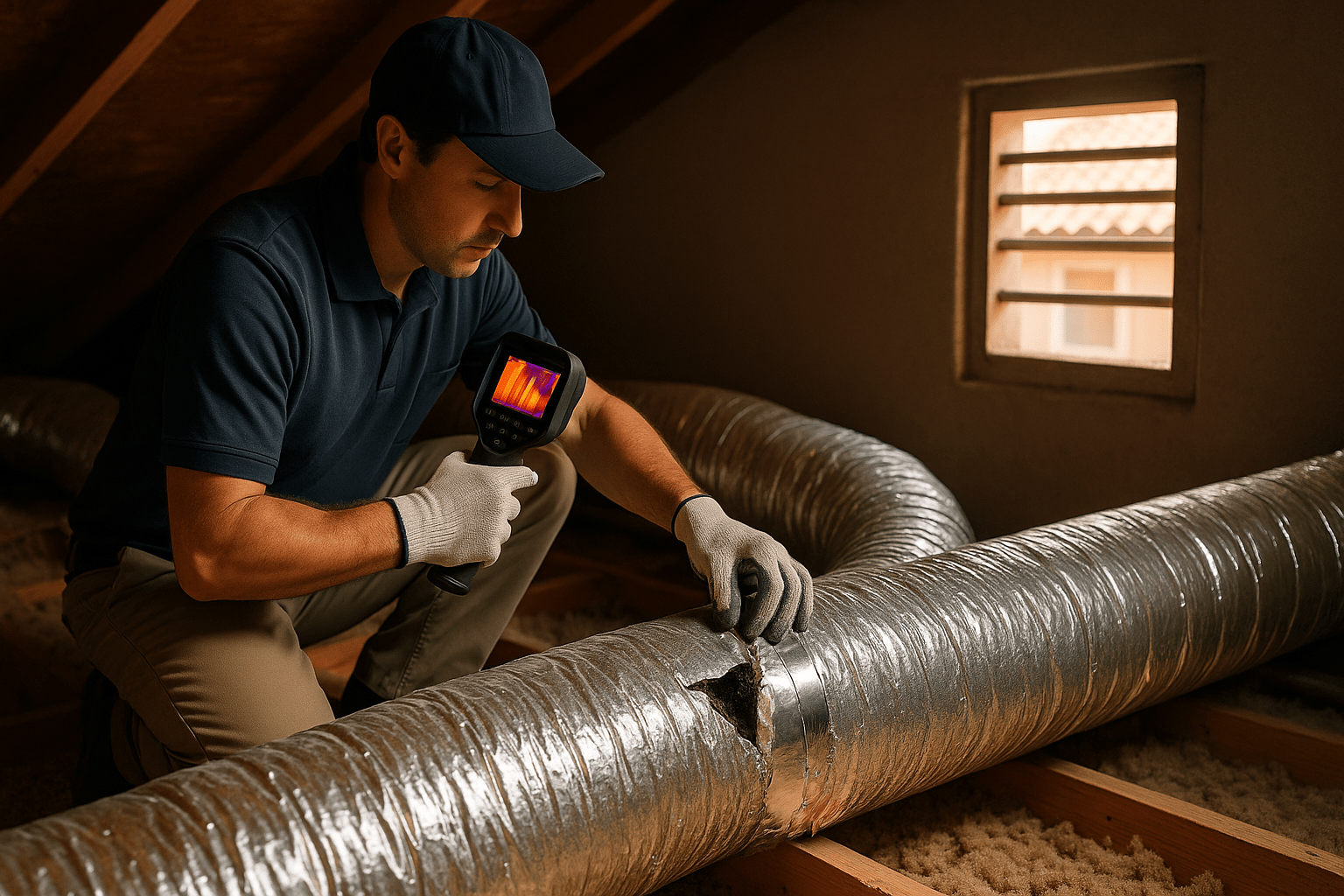
If your HVAC system is the heart and lungs of your home, the ducts are the arteries. Your heater can be brand-new and ultra-efficient, but if the ducts are leaking into the attic or sucking dusty air from a garage, you’ll still feel chilly rooms, noisy air and higher bills. In much of Las Vegas, ducts often run through unconditioned spaces – attics and sometimes garages. Every gap and loose joint is literally a hole in your comfort.
You can’t “power through” bad ducts with more equipment. In fact, oversizing the furnace or heat pump to overcome leaks often makes comfort worse: louder starts, bigger temperature swings and short on–off cycles that never feel steady. The fix most homes need isn’t a bigger machine – it’s tighter, better-balanced ductwork.
How leakage and imbalance steal comfort
Let’s talk about two problems that work together to make you cold:
- Supply leaks (air escaping before it reaches the rooms).
Imagine filling a bucket with a crack in the bottom. The furnace works harder to keep up and the rooms farthest from the equipment often feel the coldest. In winter, supply leaks in an attic are heat you paid for… drifting around your insulation instead of reaching your bedroom. - Return leaks (air sucked in from places it shouldn’t).
Return leaks drag dusty, very cold attic air into the system, which chills the air going to your rooms and clogs filters fast. They can leave a gray halo around return grilles and add that “never quite clean” feeling to your home.
Add imbalance – too few returns, crushed flex duct, long runs with needless bends – and you get weird pressure in parts of the house. Doors pull shut by themselves, some rooms whine at the vent, others go quiet and cold. None of that is normal and none of it means you need to live with it.
The everyday signs your ducts need attention
You don’t need gauges to spot trouble. Walk your home and notice:
- One or two rooms never warm up even when the heat runs.
- Dusty grilles – especially a fuzzy gray ring around the returns.
- Whistling or hissing at certain vents or a blower that sounds strained.
- Temperature swings – too warm near the thermostat, too cool in bedrooms.
- Doors moving by themselves when the system turns on (pressure imbalance).
- High winter bills that don’t match your thermostat habits.
If two or more of these sound familiar, your system is waving a flag: the ducts, not the heater, are the bottleneck.
A simple tour of your ducts (no ladders required)
Before you think about tools, do this “zero-risk” walkthrough:
- Look, don’t pry. Open supply registers and returns; use a flashlight. Is there visible dust streaking around the edges?
- Count returns. Most homes need more return area than they have. If a big part of your home has no return grille, that zone may be starved for warm air.
- Watch the doors. Turn the heat on and gently close each bedroom door. If the door resists closing or pulls itself shut, that room may be building pressure because it can’t “exhale” enough air back to the system. Under-cut doors or dedicated return paths help.
- Feel the air. Put your hand over supply grilles in “problem rooms.” Weak flow isn’t always a heater issue; it’s often a restriction or leak upstream.
If this quick tour raises questions – or the attic/garage access looks tricky – call a specialist. Safe access, good lighting and the right sealants matter more than bravery.
Subscribe and follow us to find out what you can safely DIY and when to call a specialist. Look for our next article!
Comments are closed