
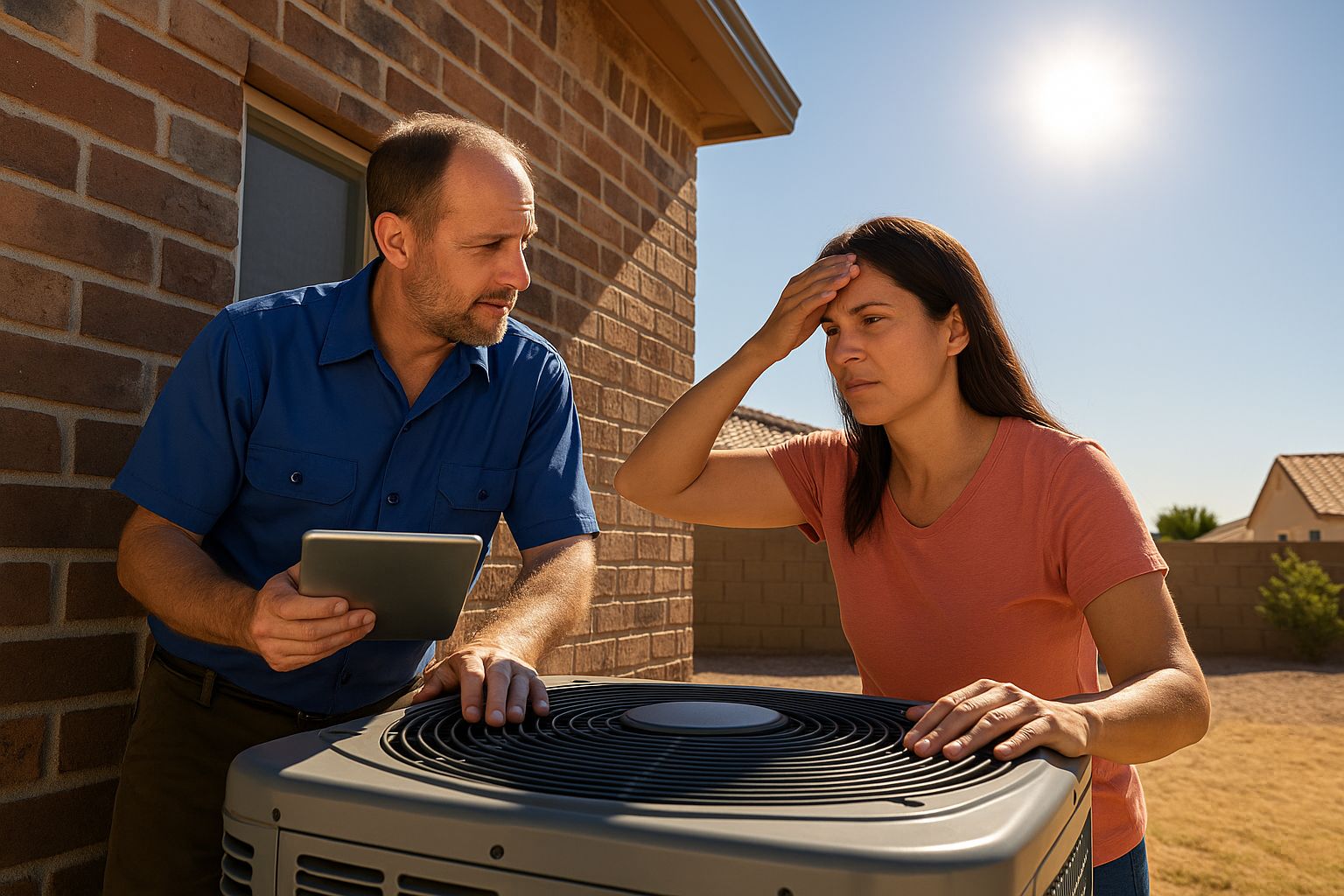
Choosing the right air conditioning unit isn’t just about staying cool—it’s about finding the perfect balance between power, efficiency, longevity and affordability. And in Las Vegas, where summer highs routinely exceed 110°F, the stakes couldn’t be higher.
Homeowners often assume that bigger is better. A larger AC should cool the house faster, right? Unfortunately, that logic doesn’t hold up under professional scrutiny. An oversized unit will short-cycle (turn on and off frequently), while an undersized system will run nonstop trying to keep up with the heat. Both scenarios lead to discomfort, wasted energy and shorter system lifespan.
In this comprehensive guide, we break down how HVAC professionals like those at Wave Heating & Cooling correctly size air conditioning systems for Las Vegas homes. Using verified methods such as Manual J load calculations and Energy Star guidelines, we’ll help you understand the science behind sizing and why “just buy the biggest one” could be the worst decision you make this summer.
1. Why Sizing Matters More in the Desert Southwest
Las Vegas belongs to Climate Zone 3B (Hot-Dry), which presents unique demands:
– High daytime temperatures
– Low humidity with occasional monsoons
– Wide day-to-night temperature swings
– Long cooling seasons (April to October)
These conditions mean your AC must handle peak load for several consecutive months without overworking. An improperly sized unit may technically “work,” but it won’t work well—or long. Efficiency, humidity control and temperature consistency all hinge on proper sizing.
2. What Happens When an AC is Oversized?
An oversized unit may seem powerful, but it causes several serious problems:
– Short cycling: The system reaches set temperature quickly, then shuts off—over and over.
– Ineffective dehumidification: ACs need time to remove moisture; short cycles don’t allow this.
– Increased wear: Frequent starts and stops wear down compressors and fans.
– Poor airflow balance: Large units blast too much air into poorly sized ducts, causing noise, drafts and leakage.
Oversized systems often cool the air but fail to make the home feel comfortable. High humidity, hot spots and noise complaints are common outcomes we see at Wave Heating & Cooling during post-install evaluations.
3. What Happens When an AC is Undersized?
Undersized units have the opposite issue:
– They run for long periods, struggling to reach the desired temperature.
– They increase electricity usage drastically over time.
– Rooms furthest from the blower may never reach set temperature.
– They wear out faster due to constant strain.
In some cases, homeowners with undersized systems use box fans or portable AC units in addition to central cooling—driving costs higher than a properly sized system would have. In one case, a family in North Las Vegas ran a 2.5-ton system in a 2,300 sq. ft. two-story home and saw bills exceed $600 in July, despite poor cooling performance.
4. The Science of Proper Sizing: Manual J Load Calculations
Manual J is an industry-standard HVAC sizing protocol developed by the Air Conditioning Contractors of America (ACCA). It calculates heat gain and loss based on:
– Square footage
– Insulation quality
– Window orientation and type
– Number of occupants
– Local climate data
– Duct layout and efficiency
– Roofing material and attic ventilation
This is not guesswork. Engineers use Manual J software to evaluate homes room-by-room before making recommendations. If a contractor doesn’t mention Manual J—they’re winging it.
5. Matching Capacity with SEER Ratings
It’s not just about tonnage. A 3-ton unit rated SEER2 17 (Seasonal Energy Efficiency Ratio) performs much better than a 3-ton unit rated SEER2 14.3. But higher SEER2 units can cost more upfront and require better duct balancing.
Key tips:
– Match SEER2 with budget: Most homeowners benefit from SEER2 14–15 units.
– Ensure ducts support efficiency: High-SEER2 units often require variable-speed blowers and smart thermostats.
– Don’t exceed what your ducts can handle: Oversized high-efficiency systems without upgraded ducts are inefficient.
Energy Star recommends matching SEER2 efficiency with local climate expectations—critical in Las Vegas where systems work overtime.
Final Thoughts: Bigger Isn’t Bette. Smarter Is Better.
In a climate as intense as Las Vegas, the performance of your HVAC system depends less on brute force and more on precision. An AC that is too big or too small won’t keep you comfortable—and it’ll cost you more in energy, repairs and premature replacement.
The right system, properly sized and professionally installed, will save you thousands over its lifetime. If you’re considering a new AC system or want to know if your current one is correctly sized, ask for a load calculation and trust experience—not guesswork.
Wave Heating & Cooling is here to ensure your system is matched perfectly to your home and lifestyle, delivering lasting comfort and smart energy use in the most demanding desert conditions.
Comments are closed