
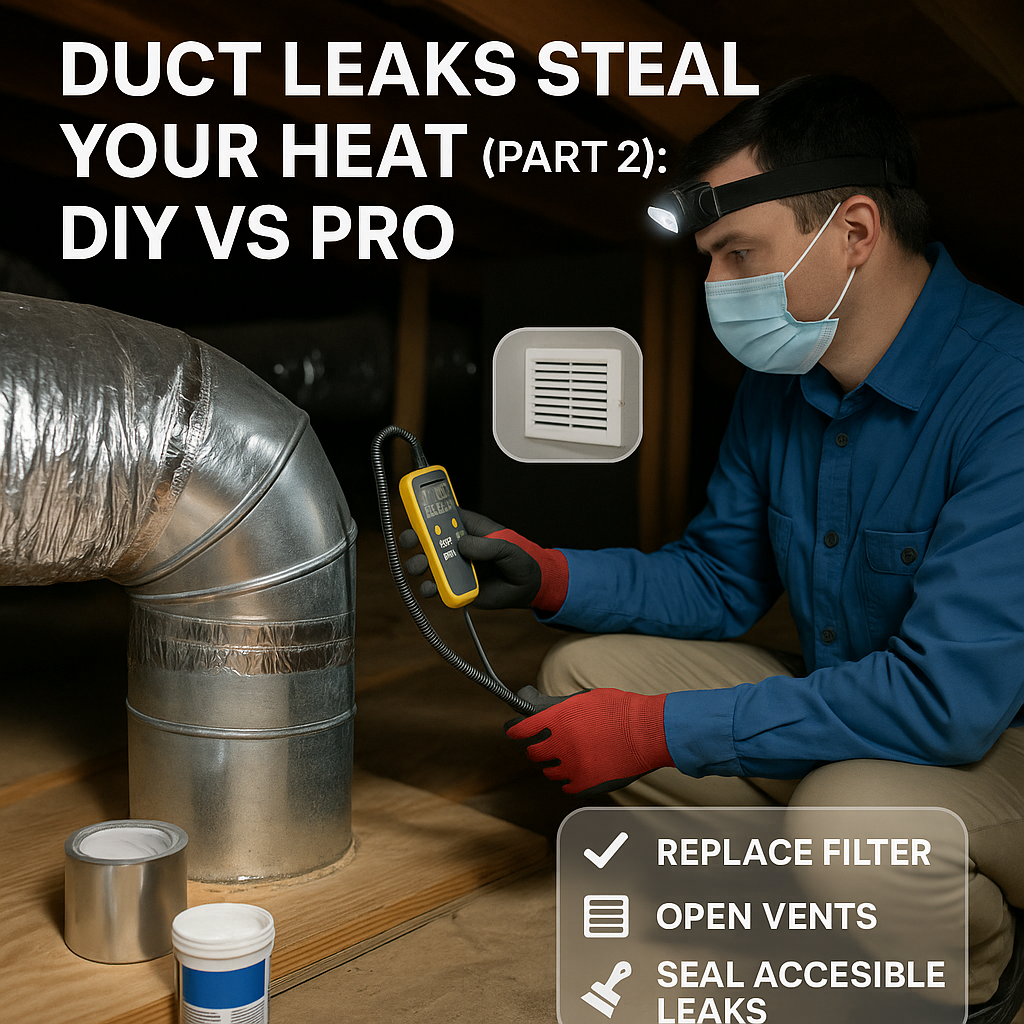
So, from the previous article you already know what to check and where you can detect the issues before they become problems.
In this article we will discuss what you can safely DIY (and what you should not).
Oh , yes, and we will have a third one on this topic, regarding the expected costs. Let’s dive in!
First, a disclaimer: We should draw a clear line! Some jobs are perfectly safe for handy homeowners; others are better left to pros with masks, lights, manometers and the experience to avoid hidden hazards!
Safe, high-value DIY
- Filters on schedule. A fresh filter is the easiest way to improve airflow. If your system only accepts a thin 1-inch filter, consider asking a pro about a deeper media cabinet later; for now, replace thin filters more often (monthly checks are smart).
- Open every supply vent and clear returns. Do not block a return with a dresser or sofa. Closing vents doesn’t “push more heat” elsewhere; it raises duct pressure and can worsen leaks.
- Vacuum grilles (supply and return) with a soft brush. You’ll often see immediate improvement in airflow and less dust recirculation.
- Seal small, obvious leaks you can reach safely – for example, a loose collar where a short, straight flex run meets a metal boot in the ceiling cavity. Use HVAC mastic (the thick, paint-on sealant) or UL-181 foil tape. Skip generic cloth “duct tape” – it dries out and fails.
- Gently straighten kinked flex that’s visible and easy to access (no crawling over wires or truss webs). Even a small unkink can revive a sleepy room.
Don’t-DIY items (call a specialist)
- Work in tight, hot or cluttered attics; anything near electrical junctions, gas flues or questionable decking.
- Sealing metal plenums and trunks (the big boxes and long runs). Getting these right requires proper materials and technique.
- Return redesigns – adding return grilles or jump ducts, creating dedicated return paths for bedrooms or resizing return drops.
- Balancing and testing with instruments (static pressure, airflow measurement, thermal imaging). This is where pros earn their keep: they find the three changes that actually fix the house instead of ten guess-and-check attempts.
If you’re unsure which category your task falls into, call a specialist. A brief phone consultation can save hours of frustration and prevent damaging something you can’t see.
The “warm-room weekend” plan (about 60–90 minutes)
Here’s a realistic, no-ladder plan you can do this weekend to buy back comfort:
- Replace the filter (5 minutes).
Mark the date. If you have pets or live near construction, set a phone reminder to check monthly. - Open and clear (10 minutes).
Walk room to room. Open every supply register fully; ensure return grilles are not blocked. Vacuum both sides with a brush attachment. - Door gap check (10 minutes).
Close each bedroom door with the heat running. If it slams or resists, that room may be under positive pressure. Leave doors slightly ajar until you address return pathways. Note which doors misbehave – give this list to a pro. - Feel and note (10 minutes).
Hold your hand at each supply. List the “weakest” rooms. You’re creating a quick map a pro can use to target fixes. - Straighten obvious kinks (10–20 minutes).
If a short section of visible flex near the air handler is crushed and you can safely reach it from the platform, gently straighten it. Don’t climb into truss mazes or step off decking. - Seal one easy joint (10 minutes).
If you find a glaring gap where a boot meets a collar that you can reach from a safe platform, apply mastic or UL-181 foil tape. Clean/dry the surface first; press and smooth the material well.
If anything feels unsafe or unclear during this plan, stop and call a specialist. Your comfort is not worth a fall or a damaged cable.
Why returns are the secret to quiet, even warmth
Most homeowners focus on supply vents: “blow more heat here.” But returns are the lungs – air must come back for warm air to keep going out. Many Las Vegas homes are starved for a return area. Symptoms include a howling return grille, a loud blower, doors that thump when the system starts and rooms that go stale.
Pros fix this by:
- Adding or enlarging return grilles, especially in bedroom wings.
- Using jump ducts or transfer grilles so closed bedrooms still “exhale.”
- Smoothing the path back to the air handler so the blower doesn’t fight itself.
These changes are not cosmetic. They can be the difference between a system that strains and one that purrs.
If your return is noisy, the solution is rarely a “quieter grille.” It’s usually more return area or a better return path. That’s specialist work.
Sealing vs. cleaning: which comes first?
“Should I clean my ducts?” is a common question. If you’ve had remodeling dust, pest problems or visible debris, a targeted cleaning can help. But in leaky systems, cleaning first is like washing your car during a dust storm. Seal the leaks and improve filtration first so debris stops entering. Then, if needed, do a one-time cleaning and keep it clean with better filters and tight joints.
Insulation: the quiet hero of warm air
If your ducts travel through an attic, insulation matters. Insulation doesn’t fix leaks, but it keeps warm air warm on its way to the room. Bare metal or thinly wrapped ducts shed heat quickly in winter. Pros will often seal first, then insulate the supply runs. This two-step is a comfort multiplier: more of the air you heat actually arrives still warm.
The payoff: what homeowners notice after sealing and balancing
- Warmer rooms, especially at the far end of the house.
- Quieter runs, less whistling and fewer door “thumps.”
- Cleaner grilles and longer filter life (less attic dust coming in).
- Shorter run times for the same comfort – your system simply breathes better.
- Lower stress on the blower and heat exchanger/coil, which supports longer equipment life.
This is why many pros call duct fixes the best upgrade per dollar in homes where the equipment itself is still healthy.
How pros diagnose quickly (what the visit should look like)
A good specialist will:
- Listen first. Which rooms misbehave? How does the system sound? Any doors that move by themselves?
- Measure static pressure in the air handler to see if the system is “choking.”
- Inspect returns for size, paths and obvious bottlenecks.
- Check a few critical joints at the plenum and boots; shine a light to look for gaps.
- Test airflow in problem rooms and look for crushed or overly long flex runs.
- Prioritize fixes: often a combination of one return improvement + targeted sealing + straightening a bad run is all it takes.
Ask for a before/after static pressure reading and a simple summary of what changed. Numbers plus plain-English explanation = confidence.
You want to find information about the costs? Well…subscribe and follow, that article will come next!
Comments are closed